2025.05.16
Blog
Portable Ventilation Fan vs. Traditional Exhaust Fan: Which Should You Use?
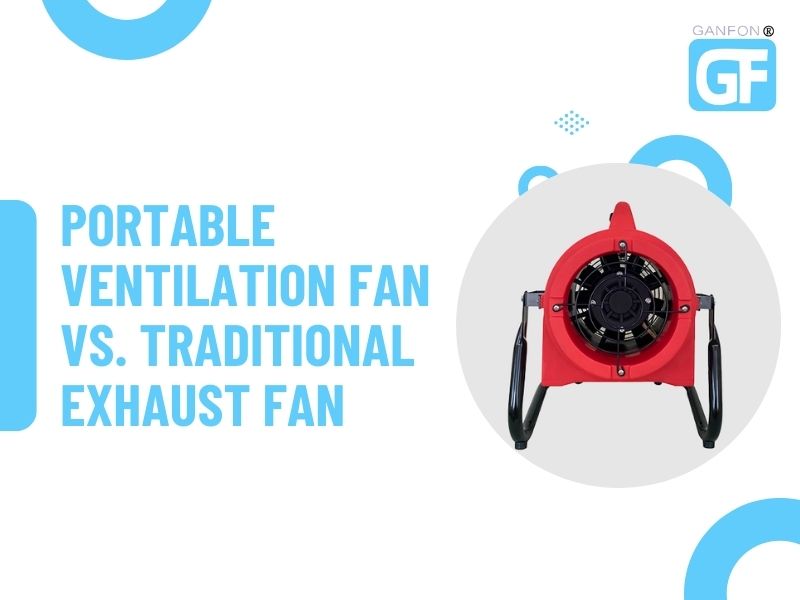
Effective ventilation is essential in environments where heat, fumes, dust, or moisture build up—whether on a construction site, in a factory, or within a confined space. While both portable ventilation fans and traditional exhaust fans are common choices for improving air circulation, their applications and benefits vary greatly.
As a motor manufacturer with years of experience designing solutions for industrial air movement, GANFON understands that choosing the right fan isn’t just about airflow—it's about adaptability, safety, and performance in your real working environment. In this article, we’ll help you navigate the key differences between portable and fixed ventilation options and determine which is right for your job.
Understanding the Two Fan Types
Before selecting a ventilation solution, it’s important to define what each system is and how it works:
Portable Ventilation Fan
This type of fan is compact, mobile, and often equipped with duct connections to push or pull air into tight, enclosed, or unventilated spaces. It’s ideal for temporary work areas, and some models offer adjustable angles or multi-speed control.
Traditional Exhaust Fan
Typically installed permanently in a wall, ceiling, or window, exhaust fans are designed to pull contaminated or hot air out of an environment, replacing it with fresher surrounding air. They’re ideal for fixed installations in rooms or buildings with long-term ventilation needs.
Core Differences at a Glance
| Feature | Portable Ventilation Fan | Traditional Exhaust Fan |
|---|---|---|
| Mobility | Freely movable; no installation required | Stationary; fixed installation |
| Functionality | Blows or extracts air with ducts | Primarily air extraction only |
| Setup Time | Fast setup, plug-and-play | Requires mounting and wiring |
| Air Direction | Adjustable airflow direction (0°–90°) | Fixed airflow direction |
| Use Duration | Ideal for short-term or rotating locations | Best for permanent, continuous use |
| Best Suited For | Confined spaces, job sites, maintenance zones | Kitchens, restrooms, production lines |
In-Depth Application Comparison
1. Flexibility and Portability
Portable ventilation fans are the go-to solution when mobility is critical. Whether you're working in tunnels, basements, vehicle interiors, or mobile workstations, these fans can be relocated quickly and connected to flexible ducts to direct airflow precisely.
Exhaust fans, by contrast, are built for stationary use. Once installed, they provide reliable, continuous air extraction in environments where airflow patterns don’t change, such as a factory's ceiling or a server room wall.
2. Ventilation Control and Direction
Portable fans allow operators to manually adjust blowing angles, connect ducting, or switch between intake and exhaust modes. This level of control makes them highly effective in spot applications—such as removing welding fumes, cooling overheated equipment, or pushing fresh air into manholes.
Traditional exhaust fans typically offer single-directional flow and are not adjustable. Their strength lies in long-term, low-maintenance operation, ideal for spaces like kitchens or equipment rooms where consistent air turnover is the goal.
3. Installation and Maintenance
If you need to avoid complex installation processes, portable fans win easily. They require no mounting hardware, can be placed wherever needed, and typically plug into standard outlets. They’re also easier to inspect and maintain, especially in environments where equipment must be moved frequently.
Exhaust fans involve mounting, electrical wiring, and sometimes even duct integration. While this setup is more complex, it pays off in spaces where air removal needs to be automated and ongoing.
Which Should You Choose?
Choose a Portable Ventilation Fan if you:
- Work in dynamic or rotating job sites
- Need to push or pull air into confined areas
- Require flexible setup and adjustable airflow direction
- Want a quick, mobile solution for cooling or ventilation
Choose a Traditional Exhaust Fan if you:
- Need consistent air extraction in a fixed location
- Are installing in a building or permanent structure
- Don’t need to frequently adjust or relocate your ventilation system
- Want a “set-and-forget” approach to air removal
How GANFON Supports Both Needs
GANFON designs and manufactures compact, high-performance portable ventilation fans built for field operations. Key features include:
- Pure copper wire motors for strong, stable airflow
- Lightweight yet impact-resistant housings, easy to carry and place
- 0°–90° adjustable air direction for maximum usability
- Optional duct compatibility for targeted ventilation or exhaust
- Waterproof and shockproof features, ideal for rugged worksites
Whether you’re trying to remove paint fumes from a renovation zone or cool down vehicle engines during maintenance work, GANFON’s portable ventilation fans help create a safer, more breathable working environment.
Explore GANFON Portable Ventilation Fans
Conclusion: Choose for Your Environment, Not Just the Function
There’s no one-size-fits-all fan. The best choice depends on where you’ll use it, how often you’ll need to move it, and whether your airflow requirements are temporary, targeted, or permanent and consistent.
GANFON is here to help you choose smarter. With deep experience in industrial motor-driven systems, we provide not just equipment—but the right ventilation solution to match your workflow. Whether you need fast, portable air delivery or fixed, reliable extraction, GANFON motors and fans offer the performance you can depend on.
Still unsure which type suits your project? Reach out to our team for expert guidance.

