2025.12.16
Blog
How Abrasive Chop Saws Handle Heat, Sparks, and Material Stress
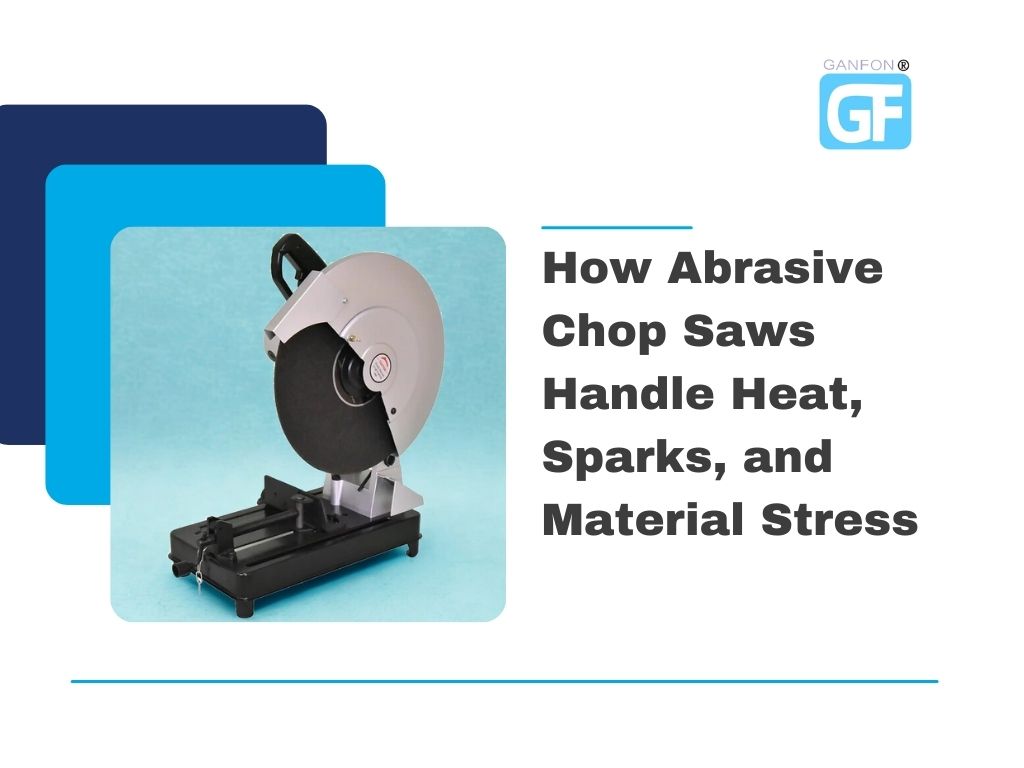
In metal fabrication and construction environments, cutting performance is not determined by speed or precision alone. Equally important is how a machine manages heat, sparks, and mechanical stress during operation. Abrasive chop saws remain widely used on job sites and in workshops because they are specifically engineered to withstand these demanding cutting conditions.
This article explains how an abrasive chop saw operates under extreme thermal and mechanical loads, why heat and sparks are inherent to the cutting process, and how experienced users manage material stress to achieve consistent and reliable results.
Understanding Heat Generation in Abrasive Chop Saws
Unlike cold cutting systems that rely on toothed blades, an abrasive chop saw removes material through high-speed friction. As the abrasive wheel rotates at high RPM, it grinds through metal by gradually wearing away both the cutting disc and the workpiece.
This friction-based cutting method naturally generates heat. When cutting steel pipes, angle bars, or solid profiles, temperatures at the cutting zone can rise rapidly. Abrasive chop saws are designed with this thermal behavior in mind:
- Heat is partially absorbed and dissipated through controlled, gradual disc wear and material removal
- Short cutting cycles help limit prolonged thermal buildup
- The workpiece cools naturally once the cut is completed
For many industrial and job-site applications, this level of heat impact is acceptable because abrasive cutting is typically followed by welding, grinding, or other secondary processes.
Why Sparks Are a Normal and Controlled Part of Abrasive Cutting
Sparks are not an indication of malfunction or inefficiency. They are a natural byproduct of material removal, created when tiny metal particles are heated and expelled during cutting.
During abrasive chop saw operation:
- Spark volume is influenced by material hardness, abrasive disc characteristics, and applied cutting pressure
- Spark direction is controlled by blade guards and machine design
- Proper housing construction protects the operator from debris
Professional metal cut-off saws are engineered to manage sparks safely through reinforced guards, stable frames, and controlled discharge paths—features commonly found in industrial-grade power tools designed for abrasive cutting.
Managing Material Stress During Abrasive Cutting
Material stress occurs when heat, cutting force, and vibration interact with the workpiece. Abrasive chop saws manage this stress differently from cold-cutting or fine-precision cutting systems:
- Gradual material removal minimizes sudden mechanical shock
- Rigid bases stabilize steel profiles during the cutting process
- Controlled feed pressure helps prevent disc binding and distortion
As a result, abrasive chop saws are particularly well suited for cutting:
- Structural steel components
- Pipes and tubing
- Rebar and angle iron
- Thick metal stock used in construction and fabrication
Although post-cut deburring is often required, abrasive cutting delivers dependable performance for applications where speed, robustness, and adaptability are more critical than fine surface finish.
The Role of Abrasive Disc Design in Heat and Stress Control
The abrasive disc itself plays a critical role in managing thermal and mechanical stress. Disc composition, bonding materials, and thickness directly influence cutting behavior and stability.
Well-matched abrasive discs help to:
- Balance cutting efficiency with disc service life
- Maintain structural integrity at high rotational speeds
- Reduce vibration when cutting hard or dense metals
Selecting the correct disc specification—matched to both the material being cut and the saw’s power output—significantly improves cutting consistency and operational safety.
Operator Technique: A Critical Factor in Performance
Even with a well-built abrasive chop saw, operator technique has a significant impact on heat generation and material stress.
Experienced operators understand that:
- Excessive downward force increases heat and accelerates disc wear
- Allowing the disc to cut at its designed speed improves efficiency
- A steady, controlled feed rate reduces vibration and material distortion
Proper technique not only improves cut quality but also extends the service life of both the abrasive disc and the saw itself.
Why Abrasive Chop Saws Remain Practical on Job Sites
Despite the availability of newer cutting technologies, abrasive chop saws continue to be widely used because they are:
- Mechanically simple and highly durable
- Suitable for outdoor and harsh working environments
- Tolerant of inconsistent or contaminated materials
- Cost-effective and straightforward to maintain
These characteristics explain why abrasive chop saws remain a core category within industrial metal cut-off saw and power tool product lines, particularly in construction, repair, and fabrication work.
GANFON’s Approach to Metal Cut-Off Saw and Power Tool Design
From GANFON’s perspective, an abrasive chop saw must perform reliably under real-world conditions—where heat, sparks, vibration, and repeated heavy-duty use are part of everyday operation. Design priorities therefore extend beyond cutting capability to include structural stability, motor durability, and operator safety.
This philosophy is reflected throughout GANFON’s metal cut-off saw product range, which is developed to support both job-site flexibility and industrial-grade cutting demands. For general construction and on-site metalworking tasks, GANFON offers 16-inch abrasive cut-off saw solutions that balance cutting capacity with portability. These saws are commonly used for steel pipes, angle bars, and structural components, and emphasize stable pivot mechanisms, reinforced blade guards, and motors capable of handling frequent start-stop cutting cycles.
Across its broader power tool portfolio, GANFON applies a consistent engineering approach to abrasive cutting equipment:
- Rigid structural construction to maintain alignment under cutting stress
- Motor systems designed for high-load, continuous abrasive cutting
- Protective housings optimized for spark and debris control
- Practical ergonomics that support stable operation in both workshop and job-site environments
By integrating these elements into its metal cut-off saw designs, GANFON delivers abrasive cutting solutions that align with real industrial workflows—where durability, reliability, and operational safety are as critical as cutting speed itself.
Conclusion
Heat, sparks, and material stress are inherent characteristics of abrasive cutting—but they are not drawbacks. They are controlled factors that abrasive chop saws are specifically designed to manage.
By understanding how abrasive chop saws handle these conditions through machine design, disc selection, and proper operation, professionals can achieve dependable results in metal fabrication and construction work.
As part of its power tool portfolio, GANFON continues to refine metal cut-off saw solutions that balance durability, safety, and performance—supporting users who demand reliable equipment in challenging industrial environments.
If you are evaluating abrasive chop saws for job-site or industrial applications, GANFON’s technical team is available to provide product recommendations and application support.
Contact GANFON to discuss your cutting requirements and identify a metal cut-off saw solution that aligns with your operational needs.

