2026.02.09
Blog
How to Choose the Right Cement Mixer Motor for Your Equipment?
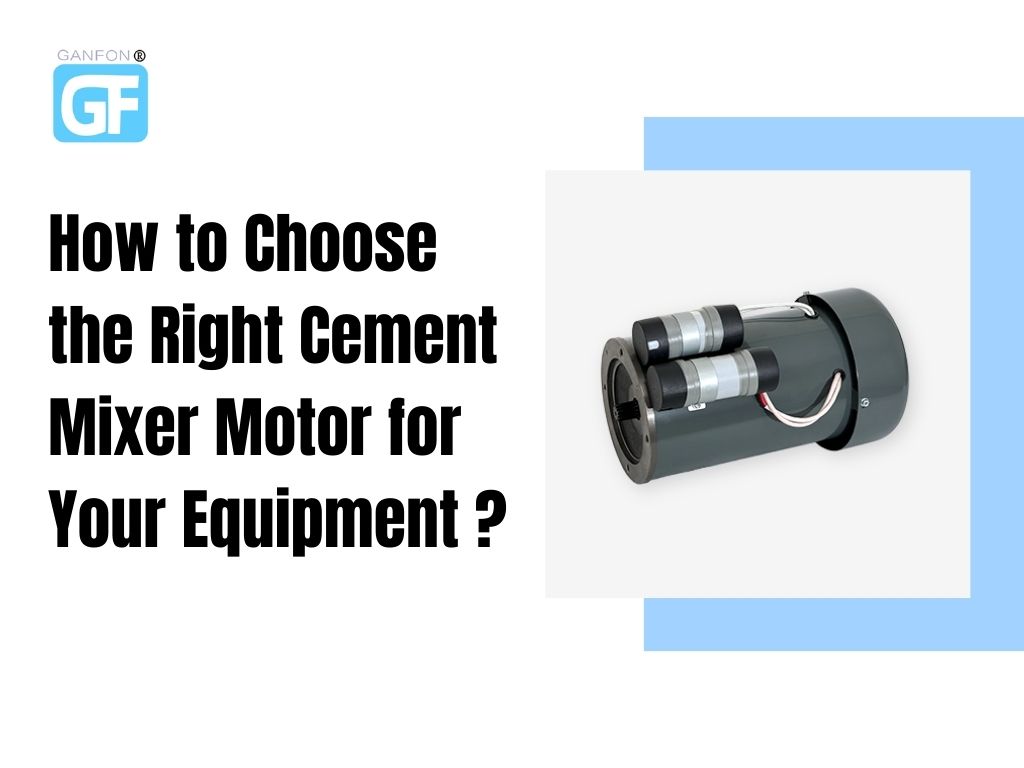
A cement mixer is only as reliable as the motor that drives it. In construction environments, cement mixers operate under heavy loads, frequent starts, and dusty, vibration-prone conditions. Choosing the wrong cement mixer motor can lead to overheating, unstable rotation, frequent shutdowns, and shortened equipment life.
Selecting the right motor is therefore not just a technical decision—it directly affects productivity, maintenance cost, and job-site reliability. Understanding the key selection factors helps equipment manufacturers, repair technicians, and procurement teams choose a cement mixer motor that matches real operating conditions.
With extensive experience in induction motor applications across construction equipment, GANFON works with machinery builders and system integrators who require stable, durable motor solutions for mixer systems and other heavy-duty tools. The following guide explains the most important criteria when choosing a cement mixer motor.
Understand the Load Characteristics of Cement Mixers
Unlike fans or pumps that operate with relatively stable loads, cement mixers present variable and impact-heavy loads. The motor must handle:
-
High starting torque when the drum is loaded
-
Continuous rotation under material weight
-
Sudden load variation as aggregate shifts
-
Repeated start-stop cycles on site
Because of these characteristics, motor selection should consider torque capability under load rather than relying solely on rated horsepower. Motors that are undersized for real operating conditions may experience starting difficulty or excessive temperature rise.
Choose the Correct Motor Type: Induction Motors Are Preferred
Most cement mixers use AC induction motors, especially single-phase induction motors in small and mid-sized mixers. This is because induction motors offer:
-
Simple and rugged construction
-
Strong starting capability with proper design
-
Low maintenance requirements
-
Good tolerance to dusty environments
-
Cost-effective replacement and servicing
For larger stationary mixer systems or industrial batching units, three-phase induction motors may be used to achieve higher efficiency and smoother torque delivery.
Single-Phase vs. Three-Phase Cement Mixer Motors
Power availability often determines motor selection.
Single-Phase Cement Mixer Motors
Common in:
-
Portable mixers
-
Small construction equipment
-
Rental units
-
Job sites with limited power access
They are easier to deploy and are typically compatible with standard job-site power supplies.
Three-Phase Cement Mixer Motors
Common in:
-
Fixed batching equipment
-
Industrial mixing systems
-
Plant-based operations
They provide higher efficiency, smoother rotation, and better performance under continuous heavy loads.
The correct choice depends on both the electrical infrastructure and the mixer duty cycle.
Starting Torque Matters More Than Rated Power
Many selection mistakes come from focusing only on horsepower while ignoring starting torque.
Cement mixers often start under partial or full load. A suitable cement mixer motor should provide:
-
High starting torque
-
Stable low-speed rotation
-
Reduced the risk of a stall during startup
Motors engineered for mixer-duty applications typically incorporate design characteristics that enhance starting torque capability and manage inrush current more effectively during startup.
Consider Duty Cycle and Thermal Protection
Cement mixers may not run 24/7, but they often operate in long mixing cycles. Motor selection should consider:
-
Expected run time per cycle
-
Restart frequency
-
Ambient temperature
-
Ventilation conditions
Preferred features include:
-
Effective cooling design
-
Suitable insulation class
-
Thermal protection where applicable
Thermal margin is especially important for outdoor construction environments.
Environmental Protection Requirements
Construction sites expose motors to dust, moisture, and vibration. These factors significantly affect motor lifespan.
A reliable cement mixer motor should include:
-
Dust-resistant housing design
-
Proper enclosure protection
-
Durable bearing systems
-
Strong mounting structure
Protection against cement dust intrusion is particularly important for long service life.
Shaft, Mounting, and Mechanical Compatibility
Mechanical fit must be verified before selection:
-
Shaft diameter and length
-
Mounting pattern
-
Base or flange type
-
Coupling or pulley interface
-
Rotation direction
Mechanical mismatch often leads to installation delays or unsafe field modification.
Voltage and Frequency Matching
Always confirm compatibility with site power:
-
Rated voltage
-
Frequency (50/60 Hz)
-
Cable and breaker capacity
Incorrect power matching can cause overheating, weak starting, or insulation damage.
GANFON Cement Mixer Motor Solutions
For cement mixer applications, motors must deliver dependable starting torque, stable rotation, and durability under dusty, vibration-heavy job-site conditions. GANFON offers single-phase induction motors engineered to meet the operational requirements of cement mixer equipment, with a focus on starting torque performance, durability, and application compatibility.
Key design focuses include strong start performance for loaded drums, compatibility with common site power supply, and construction optimized for continuous mixing cycles. Structural design considerations and component selection are aligned with mixer-duty requirements, supporting reliable operation and straightforward integration into mixer assemblies.
With application-oriented technical support and flexible specification options, GANFON helps equipment builders select cement mixer motors that align with practical field requirements.
(See related product: https://www.ganfonmotor.com/en-US/p122-single-phase-induction-motor-for-cement-mixer)
Frequently Asked Questions (FAQ)
Q1: What type of motor is best for a cement mixer?
AC induction motors are most commonly used because they are durable, simple in structure, and well suited for heavy-load start conditions.
Q2: Is higher horsepower always better for a cement mixer motor?
No. Starting torque and load behavior are more important than horsepower alone. Proper matching is more critical than oversizing.
Q3: Can a general-purpose motor be used for a cement mixer?
It may operate, but general-purpose motors are not always optimized for high starting torque or frequent load variation. Motors designed specifically for mixer-duty applications typically provide better thermal margin, improved starting reliability, and longer service life.
Q4: Why do cement mixer motors fail early?
Common causes include undersizing, poor cooling, dust intrusion, overload starts, and voltage mismatch.
Q5: Do portable cement mixers usually use single-phase motors?
Yes. Most portable mixers use single-phase induction motors due to power availability and wiring simplicity.
Conclusion
Choosing the right cement mixer motor requires more than matching horsepower ratings. Load behavior, starting torque, duty cycle, environmental protection, and mechanical compatibility all determine long-term performance.
A properly selected motor improves mixer reliability, reduces downtime, and supports consistent operation in demanding construction environments.
When selecting a cement mixer motor for new equipment design or replacement projects, GANFON can provide application-based technical guidance and specification recommendations aligned with your operating conditions. Contact us to discuss your requirements and identify a motor solution that fits your mixer design.

