2026.11.10
Blog
14-Inch vs. 16-Inch Metal Cut-Off Saws: Which One Fits Your Cutting Requirements?
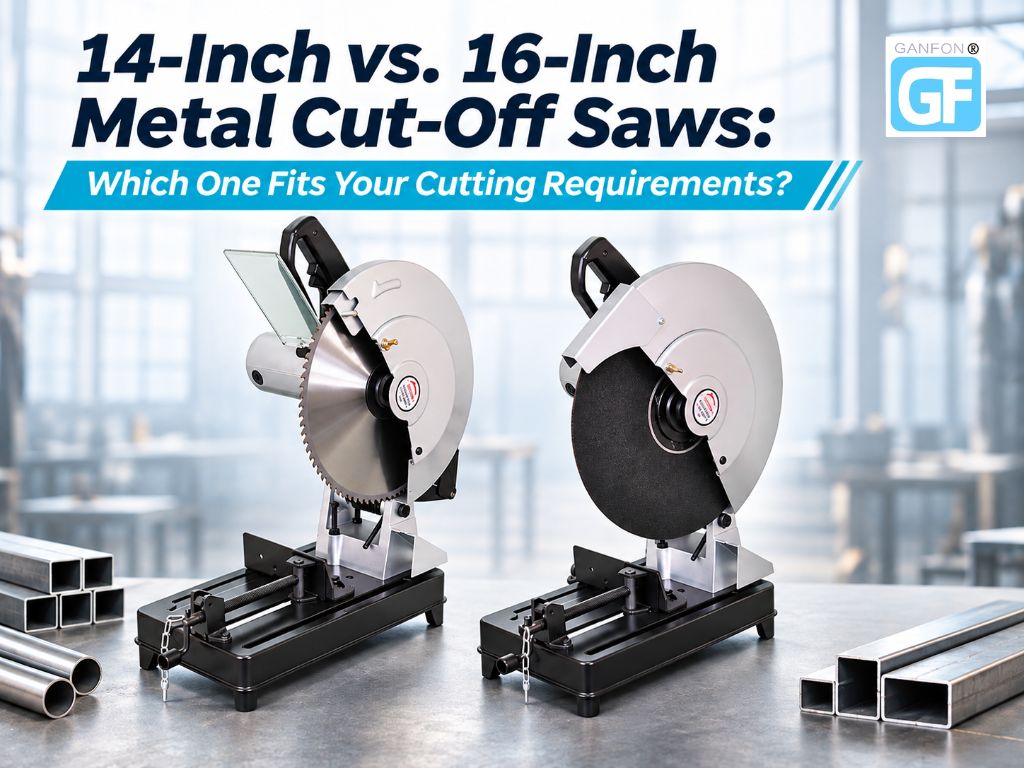
Choosing between a 14-inch and 16-inch metal cut-off saw is not simply a matter of selecting the larger blade.
For metalworking shops, manufacturers, contractors, and fabrication professionals, the more important questions are: What material are you cutting? How clean does the finished edge need to be? How much heat and spark generation can the workplace tolerate? How quickly must workpieces be clamped and processed?
GANFON offers two different metal-cutting solutions: the MC14G 14-inch Metal Cut-Off Saw, which uses a tungsten metal saw blade, and the COS16 16-inch Metal Cut-Off Saw, which uses a high-speed abrasive cutting wheel.
Because their cutting methods are different, the two models are designed for different working priorities rather than simply representing smaller and larger versions of the same machine.
Table of Contents
- What Is the Main Difference Between a 14-Inch and 16-Inch Metal Cut-Off Saw?
- When Is a 14-Inch Metal Cut-Off Saw the Better Choice?
- When Is a 16-Inch Abrasive Cut-Off Saw More Suitable?
- Does a Larger Blade Always Mean Greater Cutting Capacity?
- Tungsten Blade vs. Abrasive Wheel: How Does the Cutting Method Differ?
- Which Saw Produces a Cleaner Cut?
- How Do Heat and Sparks Affect Your Choice?
- MC14G vs. COS16: Specification Comparison
- Which Metal Cut-Off Saw Should You Choose?
- Why Workpiece Size Should Be Checked Before Purchasing
- FAQ About 14-Inch and 16-Inch Metal Cut-Off Saws
- Choose the Metal Cut-Off Saw That Fits Your Actual Workflow
What Is the Main Difference Between a 14-Inch and 16-Inch Metal Cut-Off Saw?
The most important difference is not only blade diameter, but also the cutting system used by each machine.
The MC14G uses a 14-inch tungsten metal saw blade and operates at 1380 RPM. It is designed to provide smooth metal cutting with minimal burrs and reduced spark generation.
The COS16 uses a 16-inch abrasive cutting wheel operating at 3800 RPM. Abrasive cutting removes material through high-speed friction and is suited to demanding metalworking environments where versatility and rugged operation are important.
This means buyers should compare the two machines based on:
- Cutting method
- Material type
- Required cut quality
- Heat and spark generation
- Workpiece dimensions
- Workholding requirements
- Downstream fabrication processes
Blade diameter is only one part of the selection process.
When Is a 14-Inch Metal Cut-Off Saw the Better Choice?
A 14-inch tungsten-blade metal cut-off saw is better suited to applications where smooth cuts, reduced burrs, and lower spark generation are important.
GANFON's MC14G is designed for cutting materials such as solid round iron, square steel tubing, steel, and aluminum alloys.
Its Japanese-made tungsten metal saw blade provides a controlled cutting action that helps produce a smoother cut surface with minimal burr formation.
The MC14G is particularly suitable for:
- Metal fabrication workshops
- Automotive component production
- Steel and aluminum cutting
- Work requiring smoother cut surfaces
- Applications where secondary deburring should be reduced
- Workplaces where excessive sparks are undesirable
The machine also supports cutting angles up to 45°, providing flexibility for both straight and angled metal cutting.
When Is a 16-Inch Abrasive Cut-Off Saw More Suitable?
A 16-inch abrasive cut-off saw is a practical choice for general fabrication, construction, structural metalwork, and applications involving a wider range of metal materials.
The COS16 uses a 16-inch abrasive cutting wheel operating at 3800 RPM.
It is suitable for cutting materials including:
- Steel
- Stainless steel
- Iron
- Copper
- Aluminum
The machine also features a quick-release vise that allows workpieces to be secured and repositioned efficiently during repeated cutting operations.
Typical applications include:
- Construction sites
- Structural metal fabrication
- Pipes and tubing
- Metal frames
- Steel profiles
- General manufacturing
- Repair and fabrication workshops
Abrasive cutting is especially practical when the cut will later be followed by welding, grinding, deburring, or other fabrication processes.
Does a Larger Blade Always Mean Greater Cutting Capacity?
No. A 16-inch cutting wheel does not automatically provide dramatically greater workpiece capacity than every 14-inch metal cut-off saw.
This becomes clear when comparing the MC14G and COS16.
The MC14G has a listed maximum 90° round cutting capacity of 127 mm, while the COS16 has a listed capacity of 5.1 inches, or approximately 129.5 mm.
For square material:
- MC14G: 100 × 100 mm
- COS16: 4 inches, approximately 101.6 mm
Their published maximum workpiece dimensions are therefore relatively close.
This means buyers should not assume that a 16-inch model will automatically provide significantly larger cutting capacity.
Instead, consider:
- What material will be cut most often?
- What are the actual workpiece dimensions?
- Is cut finish important?
- Are sparks and heat acceptable?
- Is abrasive cutting suitable for the process?
- Will secondary grinding or finishing be performed?
These questions provide a more useful basis for equipment selection.
Tungsten Blade vs. Abrasive Wheel: How Does the Cutting Method Differ?
A tungsten-toothed blade cuts metal mechanically, while an abrasive wheel removes material through high-speed friction.
This difference affects cut quality, heat generation, spark generation, operating speed, and wheel or blade wear.
Tungsten Metal Saw Blade
The MC14G uses a tungsten metal saw blade.
The teeth remove material in a controlled cutting action, helping the machine achieve:
- Smooth cut surfaces
- Minimal burr formation
- Lower spark generation
- Reduced heat buildup on the workpiece
This cutting method is particularly useful when the quality of the cut edge matters.
Abrasive Cutting Wheel
The COS16 uses a high-speed abrasive cutting wheel.
Instead of cutting with individual teeth, the abrasive surface gradually removes material through friction.
This makes abrasive cutting well suited to:
- Structural steel
- Pipes
- Frames
- General fabrication materials
- Construction-related metal cutting
- Applications where post-cut grinding or welding is expected
The cutting wheel gradually wears during use and should be inspected and replaced according to its condition.
Which Saw Produces a Cleaner Cut?
For applications where cut surface quality and reduced burrs are priorities, the MC14G tungsten-blade system is the more suitable choice.
The MC14G's tungsten metal saw blade is designed to provide smooth cutting with minimal burr formation.
This can reduce downstream finishing work when:
- Components require cleaner finished edges
- Parts proceed directly to assembly
- Secondary grinding should be minimized
- Dimensional consistency is important
- Surface appearance matters
The COS16 provides efficient metal cutting for fabrication and construction applications, but abrasive cutting naturally produces a different cut surface because material is removed through friction.
If the cut area will later be welded, ground, or otherwise finished, this may not be a disadvantage.
The required downstream process should therefore be considered before choosing between the two cutting systems.
How Do Heat and Sparks Affect Your Choice?
Heat and sparks are important differences between tungsten-blade cutting and abrasive cutting.
The MC14G uses a tungsten metal saw blade and is designed for low-spark cutting with reduced heat buildup on the workpiece.
The COS16 uses an abrasive wheel. During abrasive cutting, friction between the wheel and metal generates heat, while small heated metal particles may become visible as sparks.
These are normal characteristics of the abrasive cutting process.
For abrasive cutting applications, operators should pay particular attention to:
- Nearby combustible materials
- Spark direction
- Adequate workplace ventilation
- Appropriate eye and face protection
- Cutting wheel condition
- Secure workpiece clamping
- Correct cutting pressure
The working environment should always be prepared according to the cutting process being used.
MC14G vs. COS16: Specification Comparison
| Specification | MC14G 14-Inch Metal Cut-Off Saw | COS16 16-Inch Metal Cut-Off Saw |
|---|---|---|
| Blade / Wheel Size | 14″ | 16″ |
| Cutting System | Tungsten metal saw blade | Abrasive cutting wheel |
| Motor | Brush motor | Brush motor |
| Speed | 1380 RPM | 3800 RPM |
| 90° Round Capacity | 127 mm | 5.1″ |
| 90° Square Capacity | 100 × 100 mm | 4″ |
| 45° Round Capacity | 100 mm | 4″ |
| 45° Square Capacity | 95 × 95 mm | 4″ |
| Weight | 21 kg | 40 lbs |
| Main Strength | Smooth, low-burr, low-spark cutting | Versatile abrasive metal cutting |
| Typical Materials | Steel, iron, aluminum alloys | Steel, stainless steel, iron, copper, aluminum |
| Workholding | Strong clamping design | Quick-release vise |
The table shows why blade diameter alone should not determine the purchasing decision.
The two machines have relatively similar published maximum workpiece capacities, but their cutting methods and operating characteristics are significantly different.
Which Metal Cut-Off Saw Should You Choose?
Choose the metal cut-off saw according to your material, required cut quality, working environment, and downstream fabrication process—not simply according to blade diameter.
Choose the MC14G 14-Inch Metal Cut-Off Saw if:
- You prioritize smoother cut surfaces
- You want to reduce burr formation
- Lower spark generation is important
- You commonly cut steel or aluminum components
- Precision metal fabrication is a major part of your work
- You want to reduce secondary finishing
Choose the COS16 16-Inch Metal Cut-Off Saw if:
- You need abrasive cutting for general fabrication
- You regularly work with structural metal
- You cut steel, stainless steel, iron, copper, or aluminum
- A quick-release vise would improve workflow
- Your work involves construction or demanding workshop conditions
- Grinding or welding normally follows cutting
Neither machine is automatically better for every application.
The right choice depends on how the cutting operation fits into the complete manufacturing or fabrication process.
Why Workpiece Size Should Be Checked Before Purchasing
Blade diameter alone should never be used to determine whether a metal cut-off saw can handle a specific workpiece.
Before purchasing, compare the actual material dimensions with the machine's specified capacity for:
- Round material at 90°
- Square material at 90°
- Round material at 45°
- Square material at 45°
Also consider the type of material normally processed:
- Solid round stock
- Pipe
- Tubing
- Square profiles
- Structural sections
- Multiple metal types
Checking actual workpiece dimensions helps avoid selecting a saw based only on the advertised blade size.
FAQ About 14-Inch and 16-Inch Metal Cut-Off Saws
1. Is a 16-inch metal cut-off saw always better than a 14-inch model?
No.
A larger wheel does not automatically mean better cut quality, greater precision, or substantially greater cutting capacity.
The cutting system, material type, workpiece dimensions, operating speed, clamping method, and required finish should all be evaluated.
2. Which metal cut-off saw is better when I want to reduce burrs?
The MC14G is the more suitable choice when reduced burr formation and smoother cutting are priorities.
Its tungsten metal saw blade is designed to provide smooth cuts with minimal burrs, which can reduce the amount of secondary grinding or finishing required.
3. Which model should I consider for stainless steel?
The COS16 is the more clearly specified option for stainless steel within GANFON's current metal cut-off saw range.
Its abrasive cutting wheel is suitable for multiple metal materials, including steel, stainless steel, iron, copper, and aluminum.
Further Reading
-
Understanding Industrial Saws: Types, Applications, and How to Choose the Right One
Learn how cutting method, material type, cutting capacity, precision requirements, and working environment affect industrial saw selection. -
How Abrasive Chop Saws Handle Heat, Sparks, and Material Stress
Learn more about the operating characteristics of abrasive cutting, including heat generation, sparks, cutting pressure, and material stress.
Choose the Metal Cut-Off Saw That Fits Your Actual Workflow
Choosing between a 14-inch and 16-inch metal cut-off saw should begin with the material and cutting process—not the blade diameter alone.
The MC14G 14-inch Metal Cut-Off Saw focuses on smoother, low-burr and low-spark metal cutting with a tungsten metal saw blade. It is a strong option when cut quality and reduced secondary finishing are important.
The COS16 16-inch Metal Cut-Off Saw uses a high-speed abrasive cutting system for versatile metal fabrication and construction applications. Its quick-release vise also supports efficient workpiece positioning during repeated cutting operations.
Before choosing a machine, compare:
- Material type
- Actual workpiece dimensions
- Cutting method
- Required surface finish
- Heat and spark conditions
- Workholding requirements
- Downstream welding, grinding, or finishing processes
GANFON develops professional power tools for metalworking and industrial applications. If you are evaluating a metal cut-off saw for a production line, workshop, or job site, contact GANFON to discuss your cutting requirements and suitable equipment.

